
Chewing, clenching or a stressful period can cause temporary jaw pain, but recurrent pain may be related to the temporomandibular joint (TMJ), the jaw muscles, or both. The important question is knowing when it needs a professional evaluation.
You may notice:
- Pain in the jaw, ear or temple.
- Clicking, popping or grinding when you open and close your mouth.
- Difficulty opening your mouth or episodes of jaw locking.
- Pain that becomes worse when chewing, yawning or waking up.
As a trusted dentist in Tarneit, Oral Square Dental Care can assess jaw pain alongside your teeth, bite and surrounding muscles to help identify what may be contributing to your symptoms. This guide explains TMJ problems, when dental assessment is appropriate, what an examination involves and what you can do while waiting for care.
Focus: Understanding when jaw pain may indicate a temporomandibular disorder (TMD) requiring assessment.
Key Considerations: Pain pattern, jaw movement, clicking, locking, chewing difficulty and possible tooth grinding.
Assessment Approach: A dentist can examine the jaw, teeth, bite and muscles and determine whether further investigation is appropriate.
Professional Insight: Oral Square Dental Care considers the whole oral picture rather than assuming every jaw symptom has the same cause.
Related Care: Depending on the findings, patients may need routine dental care, an assessment with a family dentist or urgent dental attention.
What Is TMJ Pain, And What Does It Feel Like?
TMJ links the lower jaw on each side to the skull. TMD stands for temporomandibular disorder. It is a problem with the joint, muscles around the joint, or both. Symptoms include pain, limited movement and noises in the joints.
Common Symptoms
| Symptom | What You May Notice |
|---|---|
| Jaw pain | Aching or tenderness around the joint or chewing muscles |
| Ear-area discomfort | Pain or pressure near the front of the ear |
| Jaw noises | Clicking, popping or grating during movement |
| Restricted movement | Difficulty opening the mouth normally |
| Locking | The jaw temporarily becomes stuck |
| Headaches | Discomfort around the temples can accompany jaw symptoms |
| Chewing pain | Symptoms increase when eating or using the jaw |
A click by itself does not necessarily mean the joint is damaged. The combination of pain, restricted movement or locking is more useful when deciding whether assessment is warranted.
What most experts miss is that jaw symptoms do not automatically mean the joint itself is the source of pain. Muscles surrounding the jaw can produce significant discomfort, so identifying where the pain comes from matters before treatment is selected.
Get Your Jaw Pain Properly Assessed
When Should You See A Dentist About Jaw Pain?
You should arrange a dental assessment when jaw pain keeps returning, interferes with eating or becomes associated with restricted jaw movement. Persistent or worsening symptoms deserve more attention than an isolated, mild ache.
Book An Assessment If You Notice
- Pain that repeatedly returns during chewing.
- Tenderness around the jaw joint or chewing muscles.
- Increasing difficulty opening your mouth.
- A recurring locking sensation.
- Jaw symptoms combined with tooth wear or suspected grinding.
- An uncomfortable change in how your teeth meet.
A dentist can help determine whether the symptoms appear related to the jaw joint, muscles, teeth, bite or another issue. Experts recommend medical assessment for TMJ dysfunction symptoms and urgent care for symptoms such as difficulty eating or drinking, severe headaches or vision changes.
When Is It More Urgent?
Normal jaw pain is not serious or rapidly changing. Seek immediate medical or dental assessment if you have significant difficulty eating or drinking, major swelling, severe facial trauma, sudden severe pain, or troubling neurological or visual signs.
If you are unsure about the need for urgent treatment of your symptoms, call an emergency dental clinic in Tarneit who will advise you on the next step.
TMJ symptoms can be caused or made worse by:
There are several things that could be causing your jaw symptoms such as trauma, clenching, grinding, bite changes, joint wear and tear and repetitive strain.
Regular Contributors
- Clenching and grinding: Repeated muscle activity can increase pressure and lead to jaw discomfort.
- Jaw overuse: Chewing gum or eating hard foods or holding your mouth wide open for long periods of time can irritate an already sensitive jaw.
- Injury: Trauma to the jaw, head or neck can cause symptoms of the joint or muscle.
- Joint disorders: Joint disorders can lead to pain, stiffness or changes in movement.
- Stress and sleep: Stress can increase muscle tension and may make existing symptoms feel worse. It should not automatically be treated as the sole cause of TMD.
The importance of timing can’t be overlooked. Telling your dentist whether pain is worse after waking, during meals,
after long conversations or at the end of the day can provide useful clues about possible contributing factors.
How Does A Dentist Check Jaw Pain?

Typically, a TMJ evaluation will start with your symptoms and a physical examination, not with advanced imaging. The dentist may observe how your jaw moves, your chewing muscles, teeth and bite and ask if you have habits such as clenching or grinding.
What Your Dentist May Assess
| Area | Why It Is Important |
|---|---|
| Jaw movement | Indicates restriction or changes in opening |
| Joint noises | Checks for clicking, popping or grinding |
| Jaw muscles | Determines tenderness or pain related to the muscles |
| Teeth | Checks for wear, fractures or other dental causes |
| Bite | Looks for changes or discomfort when the teeth come together |
| Symptoms | Identifies when, where and how the pain occurs |
Are Scans Always Needed?
No. Imaging is not automatically required for every person with jaw pain. Where the examination suggests a joint problem or another condition requiring further investigation, a dentist or doctor may consider X-rays, CT or MRI depending on the clinical question.
This distinction is important because the purpose of imaging is to answer a specific diagnostic question, rather than simply to obtain a picture of the joint.
What Can You Do Before Your Appointment?
If the symptoms are mild, avoiding activities which aggravate the jaw can help while you arrange an assessment. Common health advice recommends eating softer foods for a time, avoiding wide opening of the jaw and reducing habits like chewing gum or chewing objects.
Simple Measures
- Eat foods that are easier to chew when you have a flare-up.
- Don’t forcefully stretch the jaw or keep trying a painful movement over and over.
- Avoid chewing gum and other repetitive chewing habits.
- Look out for daytime clenching.
- Use a warm or cold pack if it helps.
- Follow the medication instructions given by your dentist, doctor or pharmacist.
Avoid making changes in your bite permanently or get irreversible dental work just because your jaw hurts. A proper TMJ assessment should come first.
Could TMJ Pain Be Coming From Something Other Than TMD?
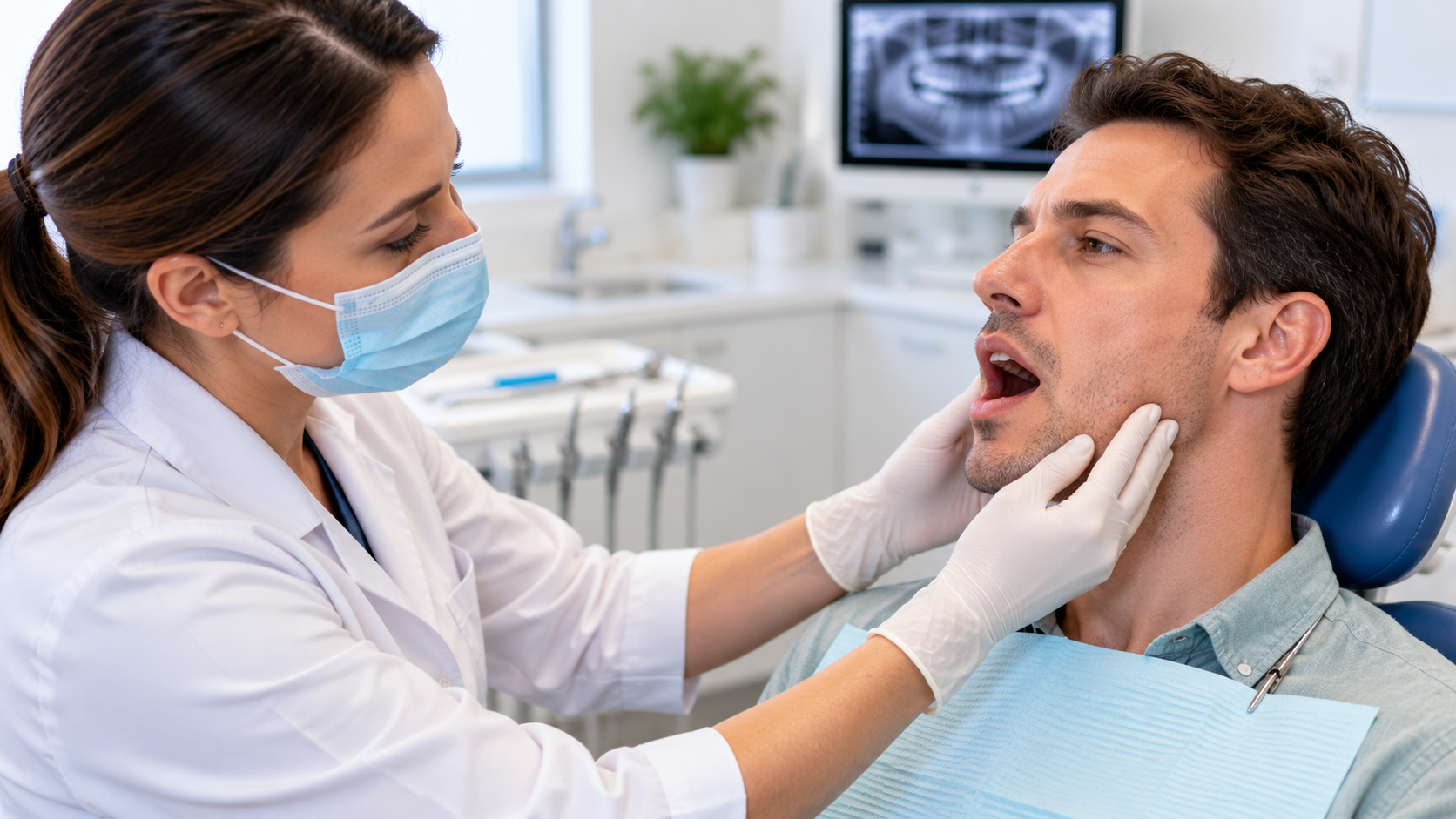
Yes. Dental problems, ear symptoms, headaches and other conditions can be mistaken for jaw or facial pain, so the broader picture needs to be considered in the diagnosis.
A useful dental assessment may therefore identify whether the discomfort is associated with:
- A painful or damaged tooth.
- Tooth wear or grinding.
- A recent change in the bite.
- Jaw joint or muscle symptoms.
- Another condition requiring medical assessment.
This is where broader dental planning becomes useful. A family dental practice may identify a tooth-related problem during the same assessment, while patients requiring orthodontic assessment may need an orthodontist when tooth or bite alignment is relevant.
Treatments such as dental implants, dentures or tooth removal should be considered for their specific dental indications rather than assumed to be treatments for TMJ pain.The practical take away is simple: treat the identified cause, rather than treating jaw pain based on symptoms alone.
When Should You Stop Waiting And Get Your Jaw Checked?
Much of the TMD symptoms will respond to conservative care, so a mild jaw pain that settles quickly may not need complex treatment. However if you have recurring pain, restricted movement, locking or difficulty eating then it should be assessed by a professional.
Oral Square Dental Care will be able to assess your symptoms and your teeth, bite and jaw function to help to decide if dental care, self-management, further investigation or another health care professional is the best option. If you have persistent jaw pain, it’s a good idea to book an assessment rather than trying to work out why it’s happening yourself.
Take The Next Step For Your Jaw Health
Conclusion
TMJ pain can involve the jaw joint, surrounding muscles, teeth or several contributing factors at once. Knowing when to seek help is therefore more useful than trying to identify the cause from symptoms alone. Recurring pain, locking, restricted movement or difficulty eating are good reasons to arrange an assessment.
Oral Square Dental Care is a trusted dentist in Tarneit, that takes a whole-mouth approach when assessing jaw symptoms, considering the teeth, bite and jaw function together. If you are concerned about TMJ pain, an examination can help clarify what may be contributing to your symptoms and what the appropriate next step should be.
FAQs
Can TMD pain make it difficult to eat?
Yes. TMD can cause pain or limited movement of the jaw making chewing uncomfortable or difficult. If you have jaw pain that is affecting your ability to eat or drink normally, have a professional look at it rather than continuing to stress the joint.
Is jaw clicking always a sign of TMJ damage?
No. Clicking or popping can be present without pain or major functional problems. The clinical significance is in the bigger picture with pain, locking, reduced movement and other symptoms. The dentist will know if the joint sounds require further investigation.
Can night grinding cause jaw pain?
Grinding or clenching of the teeth can cause or worsen symptoms of the jaw muscles. They are not necessarily the only cause of TMD . Your dentist can check for signs of wear on your teeth, ask you about symptoms on waking, and feel your jaw muscles and joints.
Should I keep eating normally when my jaw hurts?
During a flare-up, you might want to consider eating softer foods for a time to make it less stressful on your chewing. When the symptoms are better it is usually best to gradually go back to a normal diet rather than stay on a restricted diet forever. Consult a healthcare professional if the pain continues or if it becomes hard to move

Your family's trusted partner for dental health in Tarneit. Providing exceptional dental care to the Wyndham community with warmth, expertise, and a world-class atmosphere.