
Dental fillings can last for years, but that doesn’t mean they need to be replaced simply due to their age. Sometimes problems develop slowly around an existing filling, with little or no pain or visible damage.
You might notice:
- Sensitivity while eating or drinking.
- Visible crack or change around the filling.
- A filling that feels rough, broken, or loose .
- Experiencing pain while biting or chewing.
- Food gets stuck around one tooth all the time.
At Oral Square Dental Care, we’re a team of experienced dentists in Tarneit. We can help you determine if an older filling is still functioning properly, or if repair or replacement is more appropriate. In this article discuss the warning signs and what dentists check when they evaluate a filling.
Focus: Identifying when an old dental filling might need professional evaluation or replacement.
Key Signs: Cracks, chips, recurrent decay, sensitivity, leakage, poor margins & changes in the way the tooth feels.
Assessment Approach: Before suggesting treatment, Oral Square Dental Care checks the filling and surrounding tooth structure, symptoms and clinical findings.
Treatment Decision: Oftentimes you can repair a filling instead of replacing it.
Outcome: Treatment is based on the condition of the restoration and the health of the tooth underneath.
When Does An Old Filling Actually Need To Be Replaced? (H2)
The short answer is simple. A filling needs replacing when it stops doing its job. If the filling still protects the tooth properly, there is no rush. Just because something is old does not mean it is broken.
Dentists look at the whole picture. The filling itself, the tooth around it, any symptoms you have or X-rays if needed.
|
What Is Checked |
Why It Matters |
|
Filling margins |
Gaps can let bacteria in. |
|
Tooth structure |
Cracks or weaknesses affect stability. |
|
Symptoms |
Pain or sensitivity need investigation. |
|
Bite |
Too much pressure can damage fillings. |
|
Surrounding tooth |
New decay can start near the filling. |
|
X-rays where indicated |
Some problems hide below the surface. |
Replacing a filling that is still working well means removing healthy tooth structure. That is not a good trade-off. Experts advise against replacing sound amalgam fillings simply because they are amalgam.

What Are The Warning Signs That An Old Filling Is Failing?
The real warning signs are changes you can feel or see.
The Filling Has Cracked Or Chipped
A crack or chip changes how the filling fits and functions. Sometimes it is minor and can be repaired. Other times the filling has deteriorated too much and needs replacement.
Your dentist will look at the damage and tell you which category yours falls into.
Food Keeps Getting Trapped
When food starts getting stuck around an old filling, something has shifted. The contact between your teeth may have changed. Or the filling has worn down and no longer fits properly. Food traps are not just annoying. They are harder to clean. Plaque builds up and decay or gum problems can follow.
The Tooth Becomes Sensitive
Sensitivity around a tooth that already has a filling is a sign to get it checked.
Different things can cause sensitivity. It does not always mean the filling has failed. Your dentist will check the filling, the tooth and your gums before deciding anything.
Pain When Biting
Pain from biting down is a good reason to see your dentist. The filling could have fractured. The tooth itself might have cracked. Sometimes the problem is in the tissues around the tooth. The location and timing of the pain helps your dentist figure out what is happening.
The Filling Feels Loose Or Rough
You might feel it with your tongue before you see anything. A loose filling or a rough edge means something has changed. Have it checked before it gets worse.
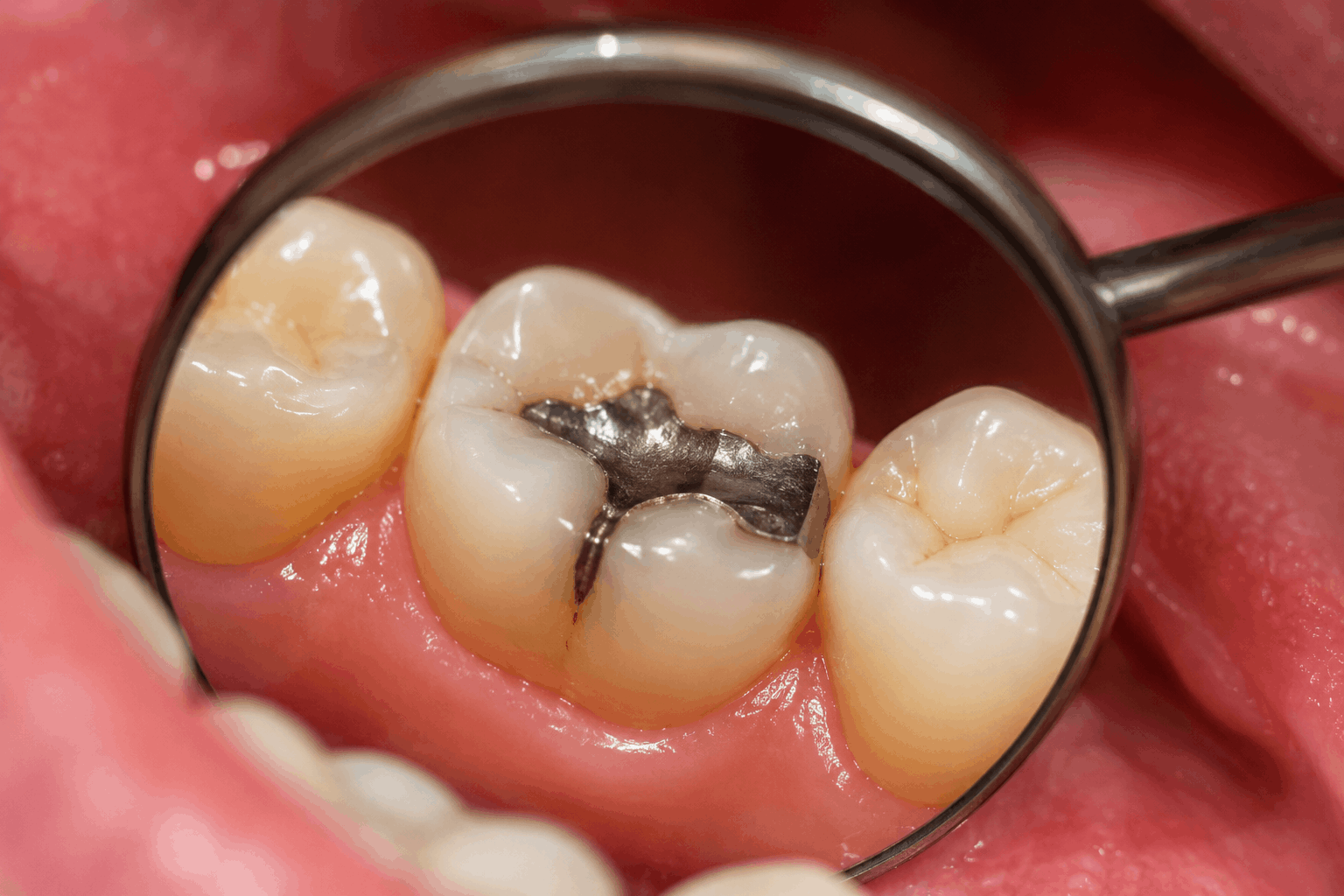
Can Decay Develop Around An Existing Filling?
A tooth can get new decay even when there is already a filling in place. The filling protects one area, but the surrounding tooth is still vulnerable.
Decay happens when plaque bacteria produce acids that eat into tooth structure. If the edges of the filling no longer seal properly, bacteria can get underneath and start new decay.
Why The Problem Can Be Difficult To Notice
Early decay often has no symptoms at all. This is why regular visits matter. Your dentist can spot issues that are not causing pain yet.
A dental check up is about more than cleaning. It is a chance to check older restorations and catch problems early. X-rays can also help. Some issues are not visible during a normal exam.
Practical point: Do not wait until a tooth hurts to get it checked.
Does Every Damaged Filling Need Complete Replacement?
There are different options depending on what is wrong. Sometimes the dentist just monitors it. If the filling is stable, there is no need to do anything.
Sometimes a small defect can be repaired without removing the whole filling where often replacement is the only option. Extensive breakdown or decay underneath means the filling cannot stay.
And sometimes a filling is no longer the right treatment at all. If the tooth is too damaged or the nerve is involved, a root canal might be needed instead.
Replacing the same filling over and over does not always solve the problem. When the tooth itself starts breaking down, other treatments become more appropriate.
Why Can An Old Filling Fail Even If You Look After Your Teeth?
Good oral hygiene is important. But it does not guarantee that your fillings will last forever.
Chewing every day puts pressure on back teeth. Grinding adds even more stress. New decay can start around the edges.
The tooth itself can weaken. And all filling materials eventually wear down. Grinding is a common cause of damaged fillings. It puts repeated force on restorations and can cause cracks or chips.
Addressing the underlying cause matters. Replacing a filling without dealing with grinding means the new filling could fail too.
How Does A Dentist Decide If Replacement Is Necessary?
The decision is based on what the dentist finds. Not on how many years the filling has been there. Your dentist will check the filling for cracks, chips and worn edges.
They will examine the tooth for decay or cracks, ask about any symptoms you have and consider your risk factors, including your oral hygiene, diet and grinding habits.
Regular teeth cleaning helps control plaque. But it is not the same as a full assessment of your fillings.
What Should You Do If An Old Filling Falls Out?
Do not ignore a lost filling. The tooth underneath is exposed and vulnerable. Avoid chewing on that side and keep the area clean. See your dentist as soon as you can.
If there is significant pain or swelling, seek help immediately. Checking a dentist available for emergency situations can help with urgent problems.
How Can You Reduce The Chance Of Filling Problems?
Not every filling problem is preventable. But regular care can help identify issues earlier.
- Brush twice daily with fluoride toothpaste.
- Clean between your teeth every day.
- Limit sugary foods and drinks.
- See your dentist regularly.
- Tell your dentist about grinding or clenching.
- Have older restorations checked.
A family dentist in Tarneit can monitor restorations for the whole family as part of routine care.
The goal is not to replace every old filling. It is to find the ones that need attention before they cause bigger problems.
Conclusion
A filling should be replaced because it is failing, not because it is old. Cracks, chips, sensitivity, food trapping and pain are better reasons to get it checked.
At Oral Square Dental Care, we’re trusted dentists for Tarneit. On the basis of evaluation, our team will suggest you the right assessment based on the finding. If you have noticed any changes in an old filling, book an assessment to fix minor issues early.
FAQs
Can a filling be replaced if it is only discoloured?
Discolouration alone does not mean a filling has failed. The material, location and condition matter. Your dentist can tell you if the colour change is cosmetic or if there is deterioration underneath.
Are white fillings always better than older metal fillings?
Not always. Different materials suit different situations. The choice depends on the tooth, the size of the filling and the biting force. Sound metal fillings do not need replacing just because they are old.
Can a dentist tell if a filling is failing without an X-ray?
Sometimes. A visual exam can spot cracks and worn edges. X-rays help find decay or changes that are not visible from the surface. Whether you need one depends on your situation.
How soon should I see a dentist after a filling falls out?
Book an appointment as soon as you can. If there is pain or swelling, do not delay. A lost filling leaves the tooth exposed and vulnerable.

Your family's trusted partner for dental health in Tarneit. Providing exceptional dental care to the Wyndham community with warmth, expertise, and a world-class atmosphere.